


Headcollar
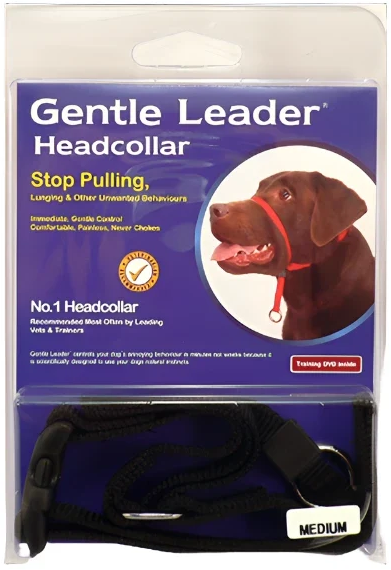
PetSafe Gentle Leader
A headcollar — nose loop plus neck strap, with the leash clipping under the chin. It turns the head to interrupt pulling and visual lock. It is not a chest harness, and it is not a muzzle: the dog can still pant, drink, and take treats when fitted correctly.
In this method it is a coached exception for temporary management — handler safety, older or physically limited owners with strong dogs, or breaking an explosive visual lock — while flat collar and slip-lead work continue in parallel. See when the head halter is the right choice and collars we exclude (chest and shoulder harnesses stay out).
Sizes
Size by neck circumference measured high behind the ears (and check the maker's snout/neck chart). If between sizes, choose the larger. Not suitable for short-snouted breeds such as pugs or bulldogs.
- Petite — typically under ~2 kg; neck about 15–22 cm
- Small — roughly 2–11 kg; neck about 18–38 cm
- Medium — roughly 11–27 kg; neck about 23–48 cm
- Large — roughly 27–59 kg; neck about 28–61 cm
- X-Large — roughly 59 kg and up; neck about 30–71 cm
How to fit a Gentle Leader
- Measure the neck. Measure neck circumference high behind the ears and check the maker’s snout/neck chart. If between sizes, choose the larger. Not suitable for short-snouted breeds such as pugs or bulldogs.
- Set the neck strap. Place the neck strap high behind the ears, snug like a belt — about one finger under, not free to rotate around the neck.
- Fit the nose loop. Form a V under the chin so the nose loop reaches the fleshy part of the nose but does not slip off. The mouth must open freely for panting, drinking, and treats.
- Introduce without pressure. Let the dog accept the feel with no leash pressure first. Use the Gentle Leader as coached temporary management while flat collar and slip-lead work continue in parallel.
Enrichment feeder
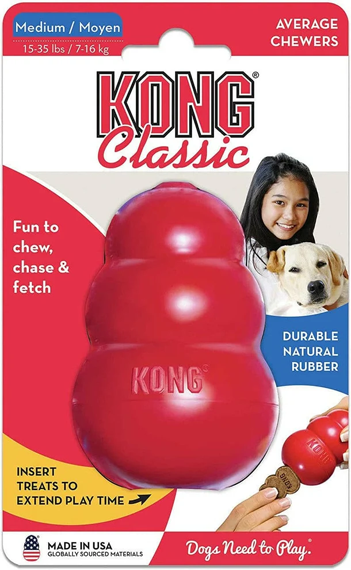
Kong Classic
A durable rubber feeder that turns a meal into focused work. Stuff with wet food(alone or layered with kibble), then freeze — that stretches feeding time, regulates chewing, and gives an appropriate outlet instead of boredom destruction.
Start loosely packed so the dog wins easily; tighten the challenge as they get skilled. Supervise power chewers, and size up rather than risk a toy that can fit fully in the mouth.
Sizes
Match weight and jaw. The widest ring of the Kong should be larger than the back of the mouth. When unsure or between sizes, choose larger. In multi-dog homes, size to the largest dog.
- XS — up to about 2 kg
- S — up to about 9 kg
- M — roughly 7–16 kg
- L — roughly 14–30 kg
- XL — roughly 27–40 kg
- XXL — roughly 40 kg and over
Classic (red) suits average adult chewers. Very strong jaws may need a tougher rubber grade (Extreme) — still size for safety first.
Fixed line
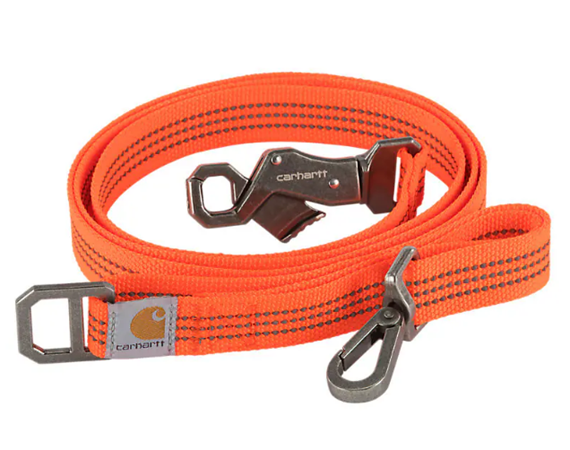
Carhartt Nylon Duck leash
A 6 ft (about 1.8 m) fixed line — medium length you manage by hand, not a spring or elastic. That matches how we teach leash work: shorten for close engagement, ease out for earned decompression, and keep a clear slack “U” when the dog is regulating space.
The standout feature is the metal trigger-claw clasp — glove-friendly, solid, and reliable under load. Widths and colours let you match the dog and your preference without changing length. Bungee and Flexi-style extenders stay excluded — see leash selection.
Widths and colours
- Small — about ¾″ (19 mm) wide × 6 ft — lighter dogs and finer handling
- Large — about 1″ (25 mm) wide × 6 ft — more mass and line presence for bigger dogs
- Colour options vary by retailer (e.g. Carhartt Brown, Brite Lime, Wine, Marine Blue)
Pick width so the line registers without dragging a sensitive dog down — same principle as line weight and the “U” dangle.