


Gold Standard Dog Training
Warwick Marshall
Gold Standard Dog Training helps owners build calm, reliable behaviour through clear structure, embodied leadership, and real-world session work. Based in Takaka and Golden Bay, Warwick works with dogs and owners across the Tasman region.
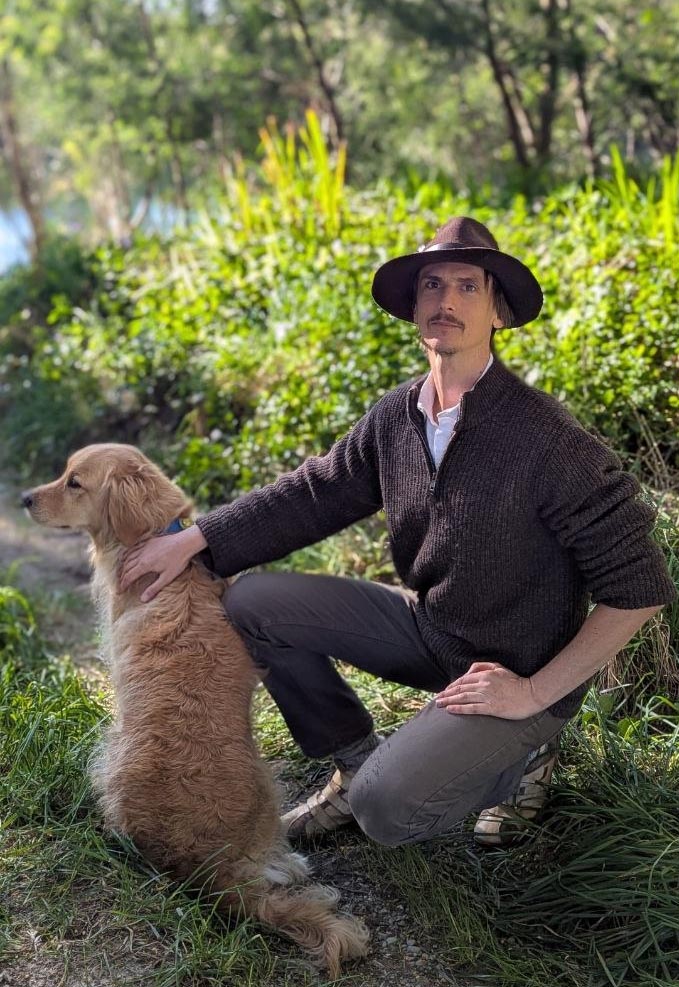
Warwick founded Gold Standard to give owners more than a quick fix — a path to understand how dogs think, how pack structure works, and how to hold calm leadership in everyday life.
Owners often say, “I finally feel like I'm enjoying my dog again.” The approach behind that — relationship before commands — is laid out in The philosophy below.
Why Gold Standard
A standard for both dog and handler.
The name marks what Warwick holds for every partnership: clear authority on both sides of the relationship, measured correction, and results that last after the session ends — not short-term compliance that evaporates when the trainer leaves. On the surface it looks like relaxed companionship; underneath it is a high bar of engagement and mutual clarity.
First-party patterns
What households typically report after the standard lands.
These are recurring outcomes from in-person coaching in Golden Bay and across the Tasman region — not generic promises. Every dog and household is different; the pattern is what we coach toward.
- Owners say they finally enjoy the dog again — walks, doors, and guests stop feeling like a negotiation.
- Lunging and fixation interrupt earlier because handler timing catches the one-second window, not the aftermath.
- Doorways and greetings calm down when access is earned and both adults hold the same line.
- Reactive dog-to-dog moments shrink when meetings are structured and social friction is read before the snap.
- Results hold between sessions when the household practices embodied leadership — not only cue lists.
The philosophy
We aren't training commands. We're rebuilding relationships.
Warwick doesn't just train dogs — he teaches owners how to become someone their dog naturally wants to follow, without intimidation, shouting, or constant bribery. Commands are easy; trust, respect, and leadership are harder, and those are the things that last.
The goal isn't simply to teach your dog to sit on cue. It's a relationship where your dog wants to listen — even when there isn't a treat in sight. When the line is clear, dogs relax: confidence replaces anxiety, calm replaces chaos.
Embodied pack fluency — five ideas that guide every session.
Embodiment
You are the signal source — posture, breath, tension, and follow-through must congrue before your hands move. See ready stance and anchor energy; the coached skill is expanded under Dog-Tantra below.
Presence over devices
No prongs, harsh chokes, vibration collars, or remote correction — but yes to measured leash, voice, and touch from the handler. Authority stays in the relationship, where it can be timed, calibrated, and released — see collars we exclude.
Measured physical grammar
Leash, voice, touch — downward pressure and instant slack. The down pull makes the dog heavy, ends the lean-on-the-line trick, and protects the throat — governed by conservation of force.
The internal journey
Becoming the healthy master is individual evolution: baseline shift, pack presence, and the confidence to hold structure without shushing or negotiating — see new baseline.
Ethological integration
Reading body language, posturing, and social friction; shaping access and rank within the pack grammar — not fighting the dog kingdom, but fluently joining it — see reading your dog. Where human timing and mass fall short, facilitated work with a balanced master dog — Controlled Confrontation — delivers native social corrections that resolve pushiness at the source.
How it works
How sessions work
Gold Standard training harnesses pack instinct through strong expectations and consistent boundaries — but the handler must evolve first. That means fast, firm correction from a calm place when the line is crossed — the same grammar dogs use with each other — with intensity measured to the dog by breed, age, and history. Firm physical resets are part of the toolkit: not optional add-ons, but how the boundary becomes real.
Warwick demonstrates the full toolkit in session — including when a downward jerk, butt push, or spatial block lands — so you learn timing and calibration, not dependency on Warwick forever. Intensity is tuned to the dog in front of you; the fundamentals still include physical boundary-setting. If that is not a fit for how you want to handle your dog, better to know before booking. Where deep pushiness or high-arousal dominance needs native canine feedback, sessions may use a balanced master helper dog in Controlled Confrontation: slack-line safety, light-switch yield, and calm reset — not a free-for-all. Your home work is the sustainable core: slack leash, anchor energy, cue once, and the steady message that the old contract is over and the new baseline is real.
Preferred equipment is a flat collar or properly positioned slip lead. A head collar — Gentle Leader, Halti, or similar — may be coached as temporary management for older or physically limited handlers with strong dogs. Chest and shoulder harnesses are not used — see recommended equipment and head halter guidance.
“Both pet and owner's needs are met — and stress is reduced.”
Results-focused · Individualised care
Dog-Tantra
Pack sensitivity and embodied leadership.
Dog-Tantra is Warwick's shorthand for pack sensitivity — the coached skill behind the Embodiment pillar above. He likens it to tantra only in the sense of sensitivity and alignment, not mysticism: shifting out of the analytical, worrying mind into a calmer baseline the dog can synchronise to.
This is taught in person. Warwick guides you into what those states feel like and reflects them back so you can trust your perception — what to seek, what to reward, and when the connection is real.
| Paradigm | In everyday language |
|---|---|
| Mechanical / behavioural (Beckman-style) | Rules, mechanics, and external structure — what to do with your hands, tools, and timing. Creates an obedient dog through clean repetition; the human remains a separate handler managing an asset. |
| Energy dominance (Millan-style) | Projecting calm-assertive authority outward to demand submission. Relies on personal willpower and top-down rank assertion to push the dog into a calmer state. |
| Gold Standard (pack sensitivity) | Pair clean mechanics with embodied alignment. You do not micromanage the dog; you hold a baseline so clear the dog can relax into the structure and synchronise to your rhythm. |
Read the full Dog-Tantra section in the Guide · Book a session
What to expect
Clear structure for both dog and owner.
Sessions coach you as much as your dog — timing, correction, reward, and calm leadership in the environments where behaviour matters most.
What you will learn
- How to correct effectively — and when not to
- How to reward the right behaviour at the right moment
- How to embody calm authority — energy, stance, and follow-through
- How to read your dog before it reacts
- How to use the leash as conversation, not constant tension
- How to maintain the results yourself, every day
- Confidence handling difficult moments in real environments
What your dog can achieve
- Consistent recall and slack-leash walking
- Impulse control and calmer responses to triggers
- Healthier social habits with other dogs
- Calm, trusting behaviour at home and out in the world
If your dog has reactivity, poor leash behaviour, or anxiety patterns, the process begins with safety and trust before building harder skills — see the Client Reference Guide for how firmness is calibrated by breed, age, and history.
 Already working with Warwick? The Client Reference Guide gives you key principles and reminders between sessions.
Get started
Tell us about your dog.
Based in Takaka, Golden Bay — sessions across the Tasman region. Book a session · View pricing
For new enquiries, include your dog's age, biggest challenge, and what success looks like for you. First conversation is always free.
Sessions & pricing
Session rates & locations.
First conversation is always free. Session rates depend on where we meet and what your dog needs — here is what to expect.
Golden Bay — beach, reserve & town
Recommended starter pack — 3 × beach sessions (best first step)
Beach / reserve — 55 min — $80
Town visit — same as beach
Multi-dog — enquire (send an enquiry)
- Beach / reserve: people and helper dog included
- Town: people included · no helper dogs · after 3 sessions
Private household & elite
Home or custom location — $140
Elite — 2.5 hr — $350. A home-and-beyond session to shape the optimal family dog: proactive work so neuroses don't develop, and unwinding conditioning mistakes already made.
- Home / elite: household included · no helper dog
$140 · 1 hour at your home or a custom location. Fixed rate — Includes any people and dogs in the house. No helper dog is typically brought to a home.
Nelson Bays & other locations
Nelson beach sessions will open on advertised dates — likely a weekend when Warwick runs a Nelson push. Enquire to hear when dates are set.
Nelson Bays pricing is confirmed on enquiry — use the contact form or call Warwick.
Book online · Send an enquiry to get started.
Common questions
Straight answers before you book.
Who is the dog trainer at Gold Standard Dog Training?
Warwick Marshall is the dog trainer behind Gold Standard Dog Training. He coaches owners in person from a base in Rangihaeata, Takaka (Golden Bay), and across the Tasman region in New Zealand. Call or text 027 814 2222.
How much does dog training cost in Golden Bay?
The first conversation is always free. In Golden Bay, a Recommended starter pack is 3 × beach sessions and is the usual best first step. A Beach / reserve — 55 min is $80; town sessions match beach pricing. Home or custom location is $140. Elite — 2.5 hr is $350. Nelson Bays timing and pricing are confirmed by enquiry.
Where does Gold Standard Dog Training offer sessions?
Sessions run across Golden Bay (including Takaka and Pohara) and the wider Tasman region, including Nelson Bays, Motueka, and Richmond. Work happens on beaches, reserves, town spaces, and private households — wherever behaviour has to hold in real life.
What makes Gold Standard Dog Training different from generic obedience classes?
Gold Standard coaches the owner as much as the dog: clear standards, measured leash work, and embodied leadership (Dog-Tantra / pack sensitivity). The goal is calm reliability that holds after the session — not treat bribery or a one-size class syllabus.
Do you work with reactive or difficult dogs?
Yes. Rehabilitation and dog-social calm coaching cover reactivity, anxiety, hard histories, and stuck patterns. Safety and trust come first; where needed, structured social feedback may include Controlled Confrontation with a balanced master helper dog.
How do I book a dog training session?
Book online at https://goldstandarddogtraining.nz/book, send an enquiry via https://goldstandarddogtraining.nz/contact, or call 027 814 2222. Include your dog’s age, biggest challenge, and what success looks like for you.